
COGNIZANT RESEARCH
Tech industry’s AI advantage hinges on its workforce
<p><br>
<span class="small">September 18, 2026</span></p>
<h2><span class="h6"><b>The tech industry’s high level of AI maturity is buoyed by outsized productivity gains, according to our recent research, but is out of step with its own workforce.</b></span></h2>
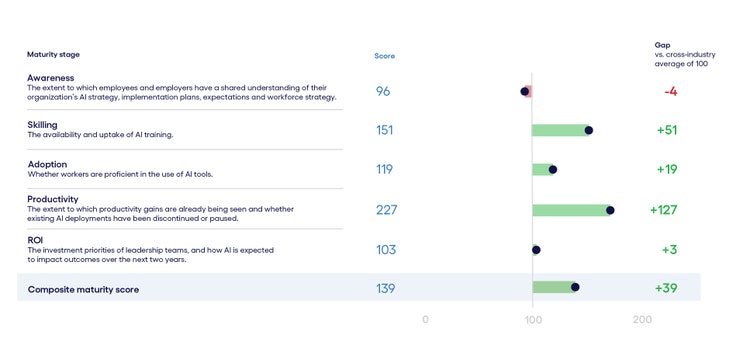
<p>The industry that builds AI is also the most ready to use it. In our recent research, the technology industry ranks first among 10 sectors in our study of AI maturity, a full 39 points ahead of the cross-industry average. </p>
<p>Technology companies train their workforce more thoroughly than any other industry, their employees are the most proficient with AI, and businesses in the sector spend the most on AI while holding one of the lowest rates of project abandonment.</p>
<p>Not that the industry is without its challenges. There’s evidence that tech businesses might not be adequately preparing workers for the changes ahead—changes that are closely related to workers’ higher than average levels of AI-driven productivity, the industry’s unabashed focus on efficiency and employees’ unease about what this means for their own job. </p>
<p>This report is part of our series of studies exploring the numerous elements necessary for closing the gap between AI's technical capabilities and real-world results. The analysis in this report is based on data collected from 471 employees and 121 senior executives from the technology industry.</p>
<p>We’ve calculated a maturity score for each industry included in the study, based on how they rate themselves in the five dimensions of AI maturity: awareness, skilling, adoption, productivity and ROI. The composite score gauges their preparedness for adopting and realizing the full value of AI (see Figure 1).</p>
<p>As described in our <a rel="noopener noreferrer" href="/content/cognizant-dot-com/us/en/insights/insights-blog/workforce-upskilling-for-ai-value.html" target="_blank">previous research</a>, businesses that sequentially work through these five phases of maturity are best positioned to achieve their AI objectives.<br>
</p>
<p><b>Technology’s AI maturity exceeds the cross-industry average</b></p>
<p><span class="small">Click to enlarge<br>
*Average of the five maturity stage scores <br>
Source: Cognizant <br>
Base: 471 employees and 121 senior executives from the technology industry <br>
Figure 1<br>
</span></p>
<p>Five findings stand out:</p>
<ul>
<li><b>Technology sets the high-water mark for skilling.</b> More than four in five tech workers (82%) received AI training in the past year, compared with 54% across industries. They are also trained more deeply, with 38% receiving more than 30 hours a year versus 24% elsewhere.<br>
<br>
</li>
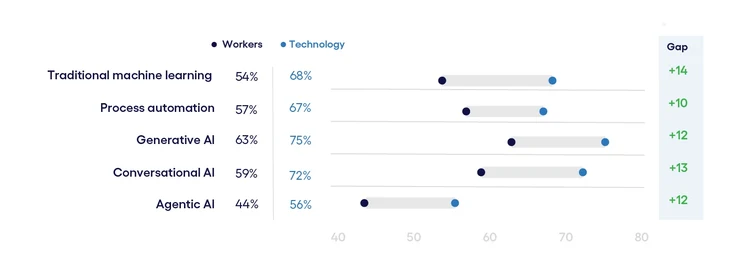
<li><b>Its workforce is the most AI-proficient of any sector.</b> Tech workers report clear or expert command of AI tools at an aggregate 68% against 55% across industries. They lead in every tool category measured, from traditional machine learning to agentic AI.<br>
<br>
</li>
<li><b>Tech workers’ productivity gains skew large.</b> More than one-quarter of tech workers (26%) report productivity gains above 20%, compared with the 17% cross-industry average. Further, 58% of tech employers already see measurable gains in worker productivity versus 42% elsewhere.<br>
<br>
</li>
<li><b>A communication gap muddies the waters.</b> Despite these advantages, the tech sector has an outsized communication gap between execs and employees when it comes to a shared understanding of what AI means for workers’ day-to-day roles. At 30 points, this gap is among the widest of any sector, making awareness the one AI maturity dimension where technology ranks below average.<br>
<br>
</li>
<li><b>Unease about job security could undercut other AI gains.</b> Tech workers are the most likely of any industry to say their employer’s AI strategy is to raise productivity by reducing the size of the workforce, at 47% versus 39% across industries. It doesn’t help that the sector signals a lack of commitment to preparing workers for the big changes ahead, as it is among the least likely to name workforce enablement as its largest AI investment area.</li>
</ul>
<p>In this report, technology leaders will learn where their industry stands in the five stages of AI maturity, as well as the industry’s biggest opportunities and challenges for realizing AI value. Knowing this, executives can focus their efforts on what matters most for attaining the full potential of AI.</p>
<h3><span style="font-weight: normal;" class="h4">A look at the tech industry on the AI maturity path</span></h3>
<p>Technology's lead in AI maturity has clear causes. For most firms in the sector, AI is part of the products they produce and the operating model they use to build and sell them, which aligns commercial intent directly with internal adoption.</p>
<p>Further, the workforce is digitally native and technically deep, the cloud and data infrastructure that AI depends on is already in place, and there’s relentless competitive pressure to ship AI capabilities. Where other industries have to build the conditions for AI adoption, the technology sector largely created them in the first place.</p>
<p>AI leadership carries its own risks, however, and technology’s profile corroborates this. The sector’s skilling and productivity gains could be undercut by worker unease. While workers are more than adequately trained in AI tools, there’s less investment in workforce enablement: preparing them for how tools will be embedded into workflows, roles will be redesigned and the transition will be managed.</p>
<p>This makes the exec-employee communication gap about AI use even more glaring: Workers may sense there's something unresolved about what AI means for their job security, and they have no clarity into what that looks like for their role.</p>
<p>Here is how we see technology organizations progressing on the AI maturity path:</p>
<h4><span style="font-weight: normal;" class="h5">Awareness: The leader's blind spot</span></h4>
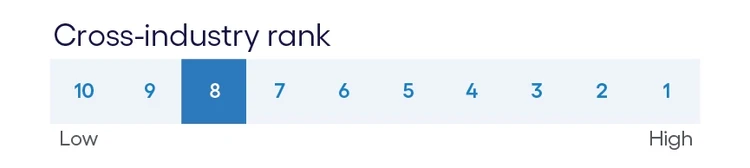
A shared understanding of how AI fits the business, including its goals and each person’s role in delivering them, is vital to realizing AI value. However, this is the one maturity dimension in which technology lags behind the cross-industry average, putting it in eighth place out of 10.
It’s not that tech workers doubt their own understanding of how to use AI in their role; here, they score highest of any industry. They also feel more strongly than the cross-industry average that their employer has communicated its AI strategy. The weakness is in the alignment between management and staff around AI expectations.
Specifically, the sector's confidence in its own communication outpaces what employees actually report. While tech employers are nearly unanimous, at 99%, that they have communicated how employees should use AI in their roles (the highest of any sector), only 69% of tech workers agree.
This mismatch could signal issues down the road. Employees may be confident enough to figure out the best use of AI for themselves today, but if businesses don’t close the gap, it could result in rogue AI use, governance breaches and overall worker unease, especially as AI changes job roles. Indeed, not only are tech workers more concerned than the industry average that they’ll face major role changes requiring significant reskilling (at 40% versus 36% cross-industry), but they’re also the most apt to believe their employers’ AI strategy will result in headcount reductions (at 47% versus 39% cross-industry).
As awareness is the very first stage of reaching AI maturity, it will be important for tech businesses to shore up this foundation to avoid trouble down the road.
<h4><span style="font-weight: normal;" class="h5">Skilling: The industry benchmark</span></h4>
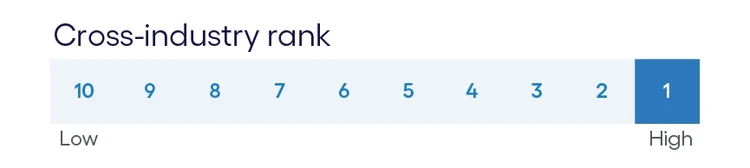
<p>Training turns awareness into capability, and no industry does more of it than technology. Fully 82% of tech workers report receiving AI training from their employer in the past 12 months, far above the rate elsewhere and the highest of any sector.</p>
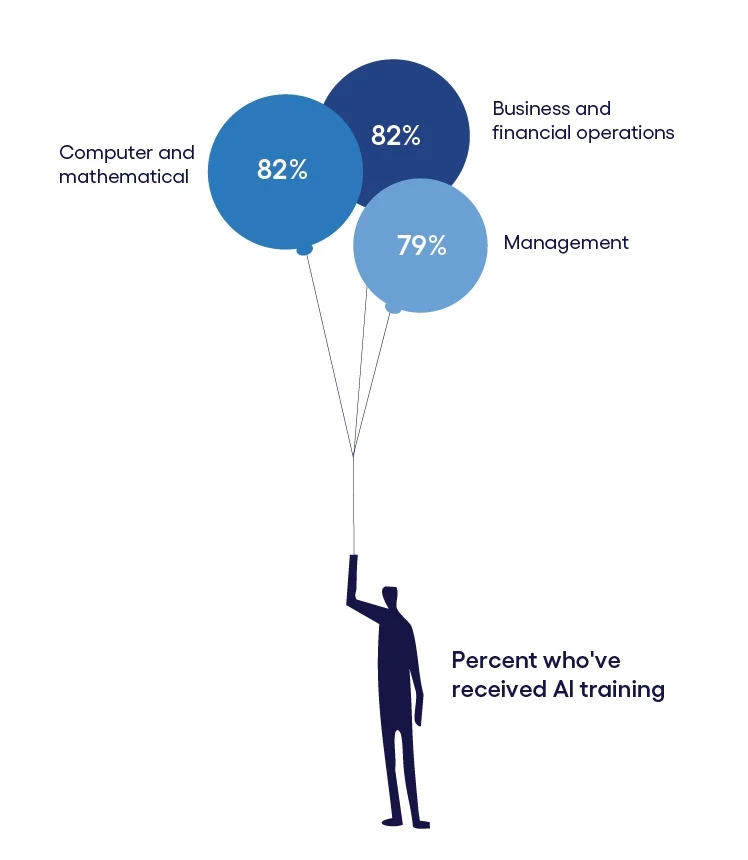
<p>Whereas many industries prioritize which departments receive training based on need, technology companies offer it evenly across management, technical and administrative staff, with computer and mathematical roles trained at nearly the same high rate as management (see Figure 2). This means the people who define and lead product development are also among the best trained in the company.<br>
</p>
<p><b>High levels of skilling across the board</b></p>
<p><span class="small">Source: Cognizant<br>
Base: 471 employees and 121 senior executives from the technology industry<br>
Figure 2<br>
</span></p>
<p>Tech is also the only industry in our study where not a single respondent said that AI training was not available to them. In a sector where capability is the product, skilling is a baseline expectation.</p>
<p>Tech workers are also trained more thoroughly. More than one-third (38%) receive over 30 hours of AI training a year, compared with about 25% across industries. That depth is enough to build competence in AI fundamentals, tooling and safe use, and it helps explain why the sector’s proficiency lead is so consistent.</p>
<h4><span style="font-weight: normal;" class="h5">Adoption: Ahead in AI tool proficiency</span></h4>
Skilling leads to AI tool proficiency, and technology workers lead in this regard across every category of AI tool we measured. In all, 68% of tech workers report a “clear or expert” understanding of these tools versus 55% across industries, a 13-point lead (see Figure 3).
More proficient in AI tools than any other industry
<p><span class="small">Source: Cognizant<br>
Base: 471 employees and 121 senior executives from the technology industry<br>
Figure 3<br>
</span></p>
<p>Particularly compelling is tech’s lead in agentic AI, with 56% of workers reporting clear or expert command versus 44% across industries.</p>
<p>Proficiency is also distributed more evenly across roles than in most sectors, with management, technical and administrative staff all reporting nearly equal levels of expertise, so adoption is not bottlenecked in a single function.</p>
<p>Asked where AI will have the most realistic impact in the near term, tech organizations also led all other industries in the number of tasks it named, with data analysis and decision support at the top of the list, followed by process optimization.</p>
<h4><span class="h5" style="font-weight: normal;">Productivity: Outsized gains</span></h4>
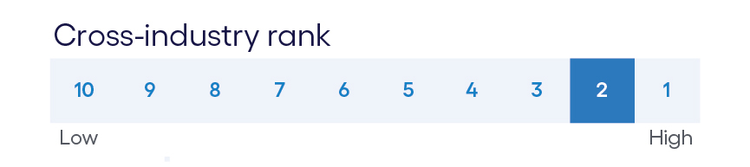
The technology sector converts its AI capability into productivity results more visibly than almost any sector. While the share of workers reporting productivity gains of up to 20% sits close to the cross-industry average, the real difference appears at the top of the scale. More than one-quarter of tech workers report productivity gains above 20% versus 17% elsewhere.
These returns are recognized at the leadership level, with 58% of tech execs saying they’re already seeing AI impact versus 42% across industries.
These returns also appear more durable. Technology holds one of the lowest AI project abandonment rates in the study, with 21% saying they’d paused an AI deployment, compared with 25% across industries. This reflects stronger project planning but also, very likely, the willingness to apply the resources needed to see these projects through to completion.
<h4><span style="font-weight: normal;" class="h5">ROI: A narrower lead</span></h4>
<p>The tech sector spends more on AI than any other, an average of $8.4 million a year, which is 17% higher than the cross-industry average. It also devotes the largest share of its technology budget to AI, at 10%, which is 20% higher than other industries.</p>
<p>Technology businesses also apply AI more intensively to the disciplines they specialize in than other industries: Across product development and research, IT infrastructure, cybersecurity and data analytics, there was an 8- to 16-point lead between tech and the cross-industry average in terms of using AI. The sector is also more likely to have a dedicated budget for AI than across industries for its primary funding vehicle.</p>
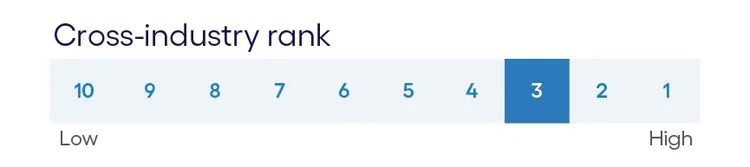
<p>And yet, the industry ranks third in this dimension of the maturity model, barely above the cross-industry average. Rather than being about the spending itself, this has everything to do with spending priorities.</p>
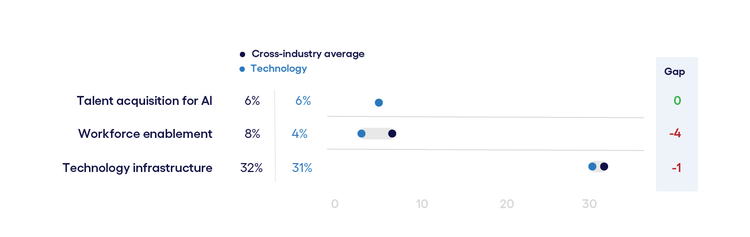
<p>Namely, tech is one of the least likely industries to name workforce enablement as its leading investment area, with half of leaders (4%) naming this as the top AI investment priority than the cross-industry average (8%), (see Figure 4). That means the industry with one of the greatest levels of unease about AI’s impact on jobs is also one of the least willing to invest in preparing its workforce for the changes AI introduces, from redesigning roles to managing the transition.</p>
<p>Meanwhile, it’s clear why its tech and talent spending priorities are on par with other industries and not above them. As one of the premier destinations for tech talent generally and AI talent specifically, tech benefits from a strong foundation of AI expertise. Similarly, many tech companies already have the infrastructure maturity other industries are still building toward—the investment there has already been made.<br>
</p>
<p><b>Low workforce enablement spending is a detriment to ROI</b></p>
<p><span class="small"><i>Percent of respondents naming each as the top area of AI investment</i><br>
Source: Cognizant<br>
 Base: 471 employees and 121 senior executives from the technology industry<br>
 Figure 4<br>
 </span></p>
<h3><span style="font-weight: normal;" class="h4">Moving up the AI maturity path</span></h3>
<p>Technology earns its place at the head of the table for AI maturity, as one might expect from the industry that built the technology itself.</p>
<p>It will be critical, however, for tech businesses to improve communication between employees and the people who lead them—and ensure expectations and understanding are aligned. So far, the sector's fluency with AI has yet to translate into clarity about what it means for individual roles.</p>
<p>Confident communication about strategy and tooling needs to go hand in hand with open communication about its consequences, as well as <a href="https://www.cognizant.com/us/en/insights/insights-blog/workforce-upskilling-for-ai-value">investment into enabling people to keep up with the significant changes</a> to their work and roles. Shoring up this weakness will require leaders to treat workforce clarity as seriously as it treats training and infrastructure.</p>
<p>Technology organizations can show the rest of the economy what a mature AI foundation looks like. The remaining test is whether it will be as clear with its people as it is capable with the technology.</p>
